COMPANION ANIMALS
 EQUINE
 Farm Animals




Thrive!


2023-01-19
 01:01:42 min

By midlife, approximately 50% of adults will have or have had a mental illness. Mental health is something that all individuals have and it exists on a continuum ranging from excelling to in crisis. Given the stressors that veterinary teams experience and their susceptibility to psychological distress, strategies for thriving mental health are necessary.
During this webcast, veterinary wellness advocate and Thrive! collaborator, Dr. Marie Holowaychuk will share her expertise and provide...
Sponsored by



2022-01-18
59:17 min
As a veterinary care provider, you are likely feeling overworked and exhausted by the never-ending pull of patient care, client needs, and other professional obligations. When you add to these the demands of your life outside of work, such as raising children, caregiving for pets, or practising self-care, it is no wonder that you feel burnt out. And as you move into the new year, your desire to balance work and home life will become stronger, leaving you to wonder, is it really possible to...
Sponsored by
2021-10-06
01:00:27 min
With veterinary hospitals functioning at maximum capacity and often short-staffed, emotions are running high, and everyone is feeling stressed. At times like these, it is easy to snap at a colleague or become disgruntled with a co-worker, especially during disagreements over case management or scheduling. Research suggests that teams who can effectively communicate and resolve conflict provide better patient care and have higher job satisfaction than teams who avoid conflict or, worse, talk...
Sponsored by
2021-05-20
31:39 min
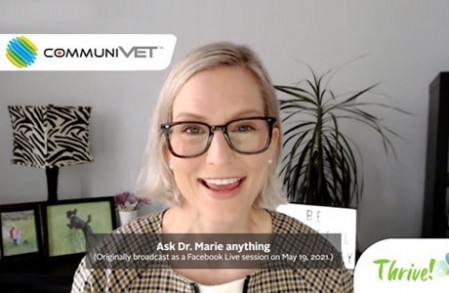
The emotional side of being a veterinary professional can be quite intense! It’s hard enough having to deal with your own feelings, let alone those of your colleagues or clients. So how can you manage? Perhaps you're looking for ways to overcome negativity or anxiety throughout the workday when dealing with a variety of situations, some more difficult than others. In this Facebook Live session, veterinary wellness advocate Dr. Marie Holowaychuk answers more excellent questions regarding...
Sponsored by


2021-05-12
31:03 min
Sometimes not feeling like yourself may be a sign that it is time to consult a mental health professional. Or perhaps someone at your clinic has expressed the need for professional support... But where should you start? Also, have you ever wondered if there is a difference between experiencing burnout and depression? In this Facebook Live session, veterinary wellness advocate Dr. Marie Holowaychuk answers three excellent questions regarding wellness. Watch the recorded session now as she...
Sponsored by

2021-05-05
21:47 min
In these challenging times, it might seem especially difficult to set boundaries and maintain work-life separation. Our fast-paced reality might also make it feel impossible to remain grounded and focused while performing everyday tasks. In this first Facebook Live session, veterinary wellness advocate Dr. Marie Holowaychuk answers two excellent questions regarding wellness. Watch the recorded session now as she shares some amazing tips on how to recognize and manage burnout, as well as how to...
Sponsored by
2021-02-18
1 h 09 min
Do your emotions sometimes get the best of you?
Our interactions with clients have changed dramatically over the last year. Not only are many of them virtual or curbside, but emotions are often heightened due to ongoing restrictions consequent to the pandemic. These difficult exchanges have led to anxiety and stress among veterinary team members, resulting in psychological distress and job dissatisfaction.
During this webcast, veterinary wellness advocate and Thrive! collaborator, Dr. Marie...
Sponsored by
Mental health has become a relevant and common topic of discussion with Mental Health Awareness Month, Bell Let’s Talk, and other initiatives aiming to educate, raise awareness, break the silence and end the stigma.
More than simply ‘hanging in there’ or ‘thinking positively’, it’s about changing the way people see and talk about mental health to strip away the shame and acknowledge how difficult it is to overcome the disease. It is also about encouraging people to seek help and support if and...
Sponsored by
Research shows that adults should get a recommended 7 to 9 hours of sleep every night. It is also a well-known fact that over time sleep deprivation can lead to health problems, and that underlying issues, such as sleep apnea, restless leg syndrome, or metabolic or hormone disorders, can cause insomnia. Not to mention that getting a restful night's sleep is essential to our physical and mental health.
Happily, sleep habits are easy to change, so by choosing one thing to do differently today...
Sponsored by